
AuDHD: What It Actually Means to Have Both Autism and ADHD
Disclaimer: This post/article/blog is for informational purposes only and is not a substitute for professional mental health advice, diagnosis, or treatment. Always seek the advice of qualified health providers with any questions you may have regarding mental health concerns.
Infographics were created by a mix of professionals and people with ADHD and selected by Katie to reflect what she has experienced personally and professionally.
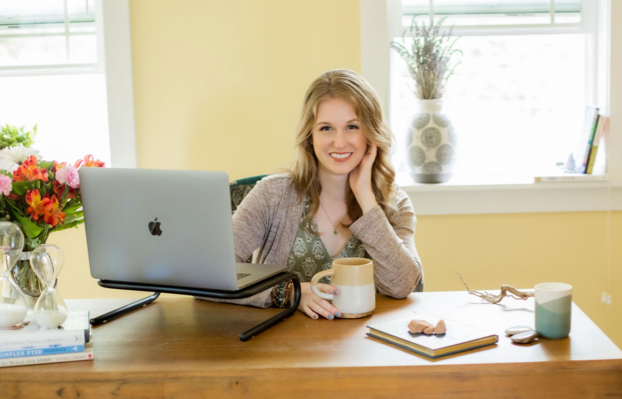
Katie
Hi, I’m Katie Ferrell, founder of Exploring Divergence, a virtual therapy and consulting practice supporting neurodivergent adults. I’m an AuDHD and NVLD Licensed Mental Health Counselor and consultant with more than 15 years of clinical experience, specializing in adult ADHD, autism, AuDHD, executive functioning, burnout, and major life transitions. I provide virtual individual therapy to clients in Washington and Vermont, along with coaching, consulting, and speaking engagements nationwide.
My work is shaped by both my clinical experience and my own experiences as a neurodivergent person. I write about the realities of neurodivergent life, including executive dysfunction, ADHD and autistic burnout, masking, late diagnosis, identity, and the challenge of building a life that works with your brain rather than against it.
This blog isn’t a textbook or a manual to follow. It’s an offering: a place to question what we’ve been taught, better understand ourselves, and consider a different way forward.
If you’ve recently come across the term AuDHD and felt a jolt of recognition, you’re not alone. For a lot of people, discovering that autism and ADHD can co-occur isn’t just a piece of clinical trivia. It’s the first thing that finally explains a lifetime of feeling like your brain is arguing with itself.
This post is for you if you’re newly diagnosed, still questioning, or somewhere in the middle of figuring out what your brain is actually doing. We’re going to break down what AuDHD means, why the combination can feel so contradictory, and what it looks like to actually live and work with this brain profile rather than against it.
What Is AuDHD?
AuDHD is an informal term used to describe people who have both autism and ADHD. It’s not a clinical diagnosis in itself; your paperwork might say “autism spectrum disorder and attention deficit hyperactivity disorder,” or list them separately, or use any number of other wordings depending on when and where you were diagnosed.
For a long time, these two conditions couldn’t even be diagnosed together. The DSM-IV actually excluded an ADHD diagnosis if autism was present, on the assumption that the attention difficulties were just part of autism. That changed with the DSM-5 in 2013, which acknowledged that yes, a person can have both, and yes, they are distinct.
Research now suggests that the two conditions co-occur at high rates. Estimates vary, but somewhere between 50 and 70 percent of autistic people also meet criteria for ADHD, and a significant percentage of people with ADHD also show autistic traits. The overlap is real, it’s common, and it’s been underdiagnosed for decades, particularly in women, girls, and anyone who learned to mask early.
Why AuDHD Feels Like Your Brain Is Fighting Itself
Here’s the thing that makes AuDHD uniquely exhausting: autism and ADHD don’t just stack on top of each other. They interact. And sometimes they pull in completely opposite directions.
The Routine vs. Novelty Problem
Autism often creates a strong drive toward sameness, predictability, and routine. Disruptions to your schedule can feel genuinely dysregulating, not just annoying. Your nervous system finds comfort in knowing what’s coming.
ADHD, on the other hand, tends to crave novelty. The ADHD brain is wired to seek out new stimulation, to get bored with repetition, and to light up for things that feel fresh and interesting. Doing the same task the same way every day is practically a recipe for paralysis.
So you get a brain that needs routine to feel safe but struggles to stick to one. That tension is real, and it’s exhausting.
Sensory Overload Meets Impulsivity
Autism frequently comes with sensory sensitivities. Certain sounds, textures, lighting, or smells can shift from mildly unpleasant to completely overwhelming fast. Your nervous system is taking in a lot.
ADHD adds impulsivity and difficulty with inhibition into that mix. So not only is your sensory system often in overdrive, but the part of the brain that would say “wait, pause, let’s not” isn’t always doing its job efficiently. This can show up as snapping when overwhelmed, saying yes to things when your body already knows it should say no, or seeking out intense experiences even when you’re already depleted.
Masking Gets Complicated
Masking, the process of hiding or suppressing autistic traits to appear neurotypical, is incredibly common and incredibly costly. For AuDHD adults, masking gets even more complicated.
The ADHD brain often struggles with the sustained cognitive effort that masking requires. At the same time, the autistic drive toward pattern recognition and social rules can push hard toward trying anyway. The result is a cycle of exhausting effort, followed by what many people call an “autistic burnout” that looks a lot like total collapse. You masked so hard for so long that now your brain has nothing left.
Hyperfocus and Shutdown
Many AuDHD adults describe cycling between hyperfocus states (ADHD-driven deep dives into something interesting) and shutdown or shutdown-adjacent states (autistic overload responses). The hyperfocus feels great until it doesn’t, until you’ve forgotten to eat, missed a deadline on something else, or stayed up until 3 a.m. on something that felt urgent but wasn’t. The shutdown that follows can look like depression, laziness, or just “being difficult,” and it’s none of those things.
Late Diagnosis and AuDHD Adults
A huge number of AuDHD adults are getting their diagnoses in their 30s, 40s, and beyond. If you’re in that group, you probably have a long history of being told you’re “too much” and “not enough” at the same time: too sensitive, not focused enough, too intense, not consistent enough.
Late diagnosis of autism and ADHD together is particularly common for people who were socialized as girls, people of color whose presentations didn’t fit the white male clinical templates, and anyone who developed sophisticated coping and masking strategies young. High intelligence can mask both conditions. Anxiety can look like ADHD. Depression can look like autism. The diagnostic picture gets messy.
If you found out late, you didn’t fail to get diagnosed earlier. The system failed to see you.
AuDHD Strengths: This Brain Profile Has Real Advantages
I want to be clear that talking about challenges doesn’t mean AuDHD is only a burden. It’s a brain profile, not a diagnosis to overcome.
AuDHD adults often have:
- Deep, encyclopedic knowledge in areas of passionate interest, because hyperfocus and autistic pattern recognition together create a genuinely powerful learning engine
- Strong systems thinking, seeing how pieces connect in ways others miss
- Intense empathy, often paired with a finely tuned sense of injustice
- Creative problem-solving, because brains that don’t follow the typical path often find genuinely novel solutions
- Authenticity, once they stop masking; AuDHD adults who have done the work of knowing themselves tend to be remarkably real
The goal isn’t to fix your brain. It’s to understand it well enough to work with it instead of against it.
Practical Takeaways for AuDHD Adults
You don’t need to wait for some perfect system to start moving in a better direction. Here are a few places to start:
- Name the tension, don’t just fight it. When you notice yourself stuck between needing routine and craving something new, that’s the AuDHD dynamic at work. Naming it takes some of the charge out of it and lets you make a deliberate choice rather than just feeling stuck.
- Build routines that have novelty inside them. Your autistic nervous system wants predictability; your ADHD brain wants variation. You can give both: a consistent framework (same morning structure, same weekly rhythm) with intentional variation inside it (different music, rotating tasks, new approaches to familiar work).
- Respect your sensory threshold as a real resource. Your sensory capacity isn’t infinite, and depleting it makes everything harder: focus, emotional regulation, decision-making. Protecting your sensory environment isn’t being difficult. It’s maintenance.
- Give yourself more transition time than seems reasonable. Task-switching is genuinely harder for AuDHD brains. Build in buffers. You’re not slow; you’re context-switching.
- Seek out diagnosis, evaluation, or support from providers who actually understand both conditions. Not all clinicians are familiar with how autism and ADHD interact, especially in adults. A provider who only knows one part of the picture can miss a lot.
Frequently Asked Questions About AuDHD
Is AuDHD a real diagnosis?
AuDHD is not a standalone clinical diagnosis; it’s a commonly used shorthand for people who have both autism spectrum disorder and ADHD. Both conditions can be formally diagnosed together, and co-occurring diagnoses are very common.
Can you really have both autism and ADHD at the same time?
Yes. Research consistently shows high rates of co-occurrence between autism and ADHD, both in terms of shared genetic factors and overlapping neurological profiles. Since the DSM-5 was updated in 2013, clinicians can now diagnose both conditions in the same person.
What are the most common AuDHD symptoms in adults?
Common presentations include difficulty with executive functioning (planning, initiation, task completion), sensory sensitivities, social exhaustion, intense focus on specific interests, emotional dysregulation, difficulty with transitions, and burnout after sustained masking or effort. AuDHD symptoms often look different depending on age, gender, and how much masking has developed over time.
How do I know if I have AuDHD or just one of the conditions?
A comprehensive neuropsychological or psychiatric evaluation from someone familiar with both conditions in adults is the most reliable path. Many AuDHD adults have been diagnosed with only one condition first, and received the second diagnosis later, sometimes years later. If something still feels unexplained after one diagnosis, it’s worth asking about the other.
Why wasn’t I diagnosed with AuDHD as a child?
Many people weren’t diagnosed for a variety of reasons: outdated diagnostic criteria that excluded co-occurring conditions, presentations that didn’t match the narrow templates clinicians were trained on, high intelligence that masked struggles, or early masking behaviors that hid the depth of difficulty. Late diagnosis of autism and ADHD together is very common, particularly for women and people of color.
Does AuDHD get better with age?
With support, self-understanding, and strategies that actually fit your brain, yes: life with AuDHD can become significantly more manageable. That said, it’s not something you grow out of. The goal is building a life and environment that works with your neurology, not fixing your brain into neurotypical compliance.
Can therapy or coaching help with AuDHD?
Yes, both can be genuinely helpful, though the fit matters a lot. Look for providers who take a strengths-based, non-pathologizing approach and who actually understand the interaction between autism and ADHD, not just one or the other.
Ready to Understand Your Brain Better?
If you’re in Vermont or Washington and you’re ready to work with a therapist who gets it from the inside out, I’d love to connect. Schedule a consultation at exploring-divergence.clientsecure.me.
If you’re anywhere and seeking a supportive, nonclinical conversation about neurodivergence, exploring a new diagnosis, or building practical strategies for everyday life, a consultation may be a great place to begin. Schedule a coaching consultation here.
You don’t have to keep figuring this out alone.
Table of Contents